

StarCraft update: You must construct additional miniatures
How community-first design and a radical playtest app are shaping StarCraft’s leap from screen to tabletop

When Archon Studio sat down for its January 2026 ‘Ask us Anything’ stream, it wasn’t simply to show off painted miniatures or reassure fans that, yes, dragoons are coming. What unfolded over nearly two hours was something more revealing, a candid look at how StarCraft: Tabletop Miniatures Game is being built, tested and handed over to its community long before launch.
This is not a game being developed behind closed doors. It’s a project Archon Studio clearly wants players to stress, poke, break and help rebuild.
A tabletop StarCraft that thinks like StarCraft
From the outset, Archon Studio has been adamant that this is not a generic sci‑fi skirmish game wearing StarCraft models. Mechanics are being shaped to echo the feel of Blizzard’s real-time-strategy (RTS) game.
Each faction leans hard into its identity:
Protoss are deliberately the most accessible entry point. Fewer models, elite durability and powerful positioning tools make them forgiving for newcomers.
Terran are the most complex. Buildings generate command points, mobility tricks like dropships and proxy deployments mirror classic RTS tactics and mastery rewards careful planning.
Zerg sit in the middle, with creep spread, burrowing and swarm pressure shaping how they control the board.


This asymmetry is intentional. Balance is not being pursued through uniformity but through faction fantasy. As Archon Studio’s designers explained, the goal is not to make every army play the same but to make every matchup feel recognisably StarCraft.
Subfactions, flavour without lock‑In
Beyond the core factions, Archon Studio is already experimenting with subfactions that add personality without forcing players into rigid archetypes.
Jim Raynor’s Raiders, Kerrigan’s Brood and Artanis‑led Protoss aren’t just cosmetic swaps. Each unlocks unique deployment options and support pieces:
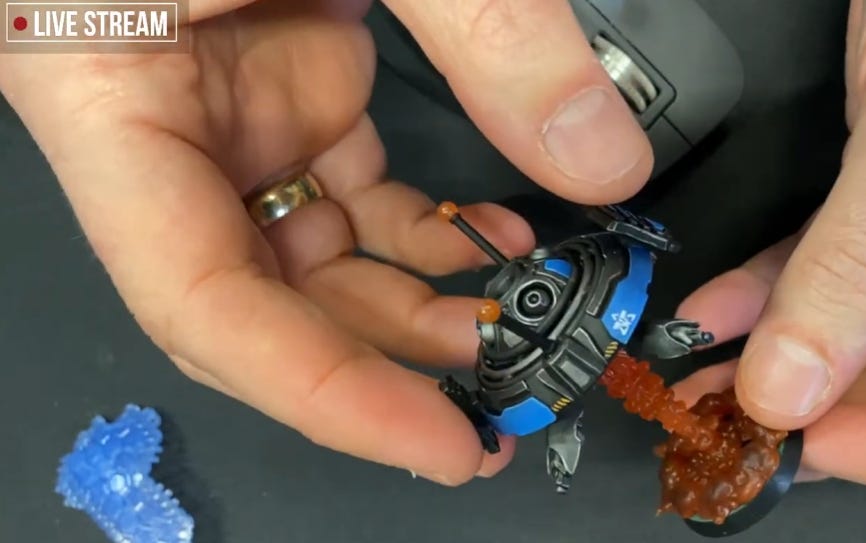
Raynor enables point defence drones and specialised marine variants.
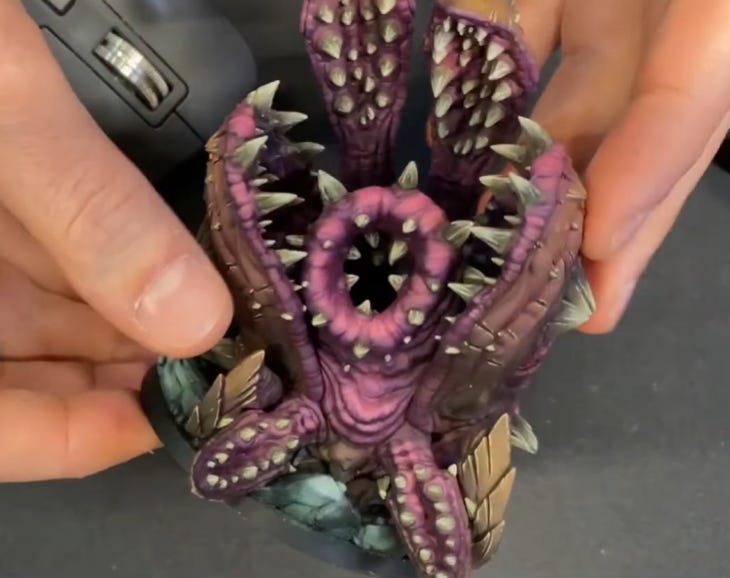
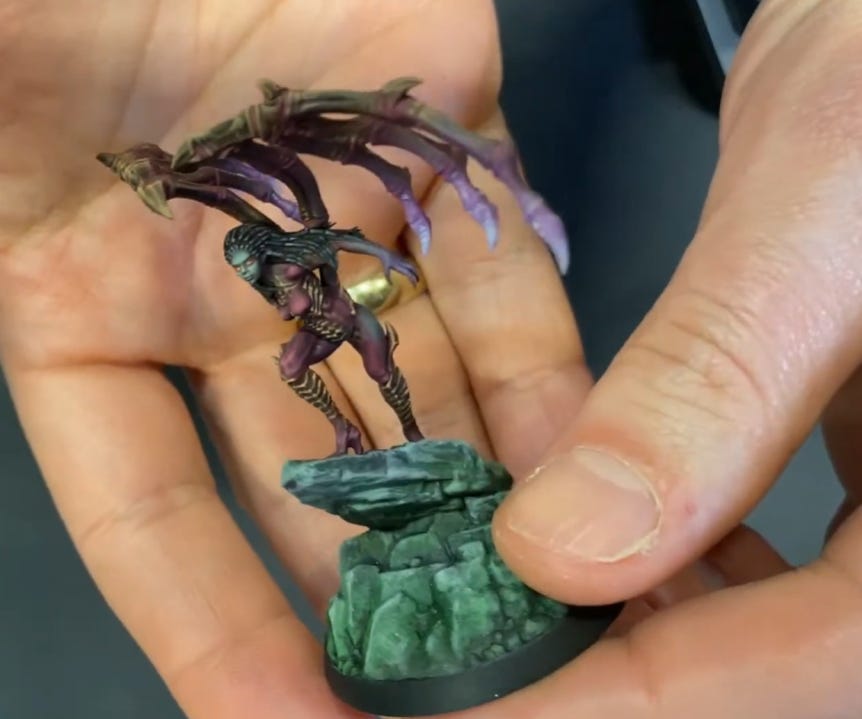
Kerrigan brings nydus worm deployment straight from the videogame.
Artanis allows pylons to reshape the battlefield through warp‑ins.
Importantly, these choices don’t invalidate other playstyles. Want to play mech Terran? Raynor’s Raiders probably aren’t for you, and that’s by design. Theme and tactics are meant to align, not fight each other.
Miniatures built for players, not just painters
Archon Studio has put real thought into how these models go together. While the sculpts look intricate, assembly has been deliberately constrained to avoid hobby fatigue.
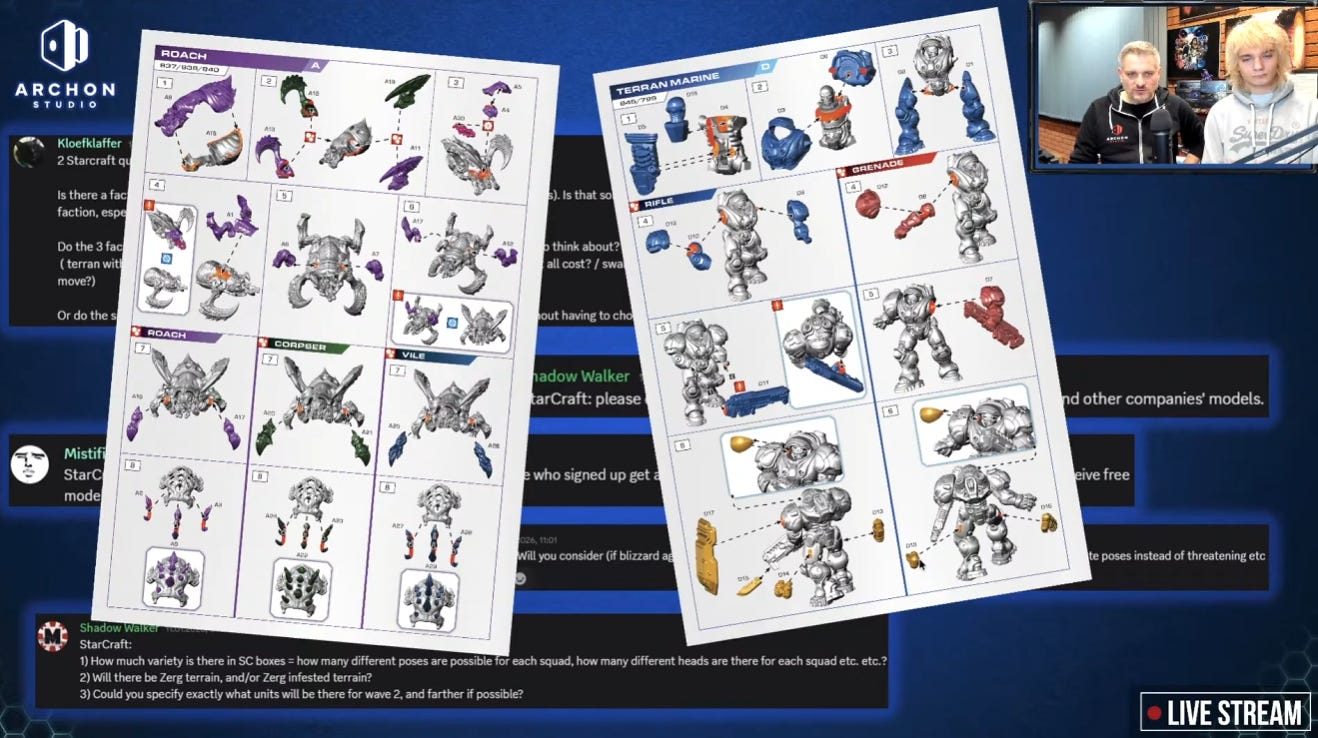
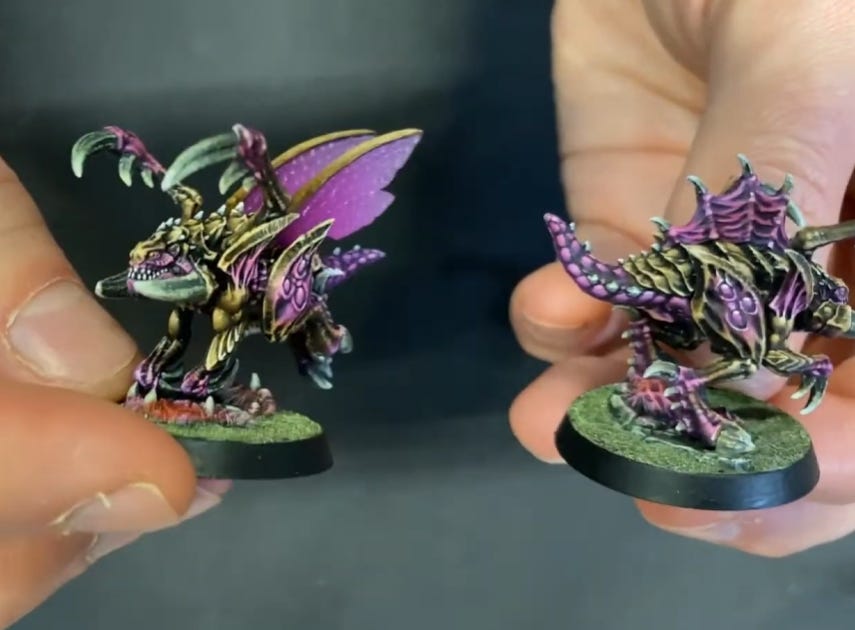
Most units share a core body with optional arms, heads and accessories. Marines can be built with rifles or grenades, Zealots offer multiple head options and Zerg units feature interchangeable limbs and strain‑specific details.
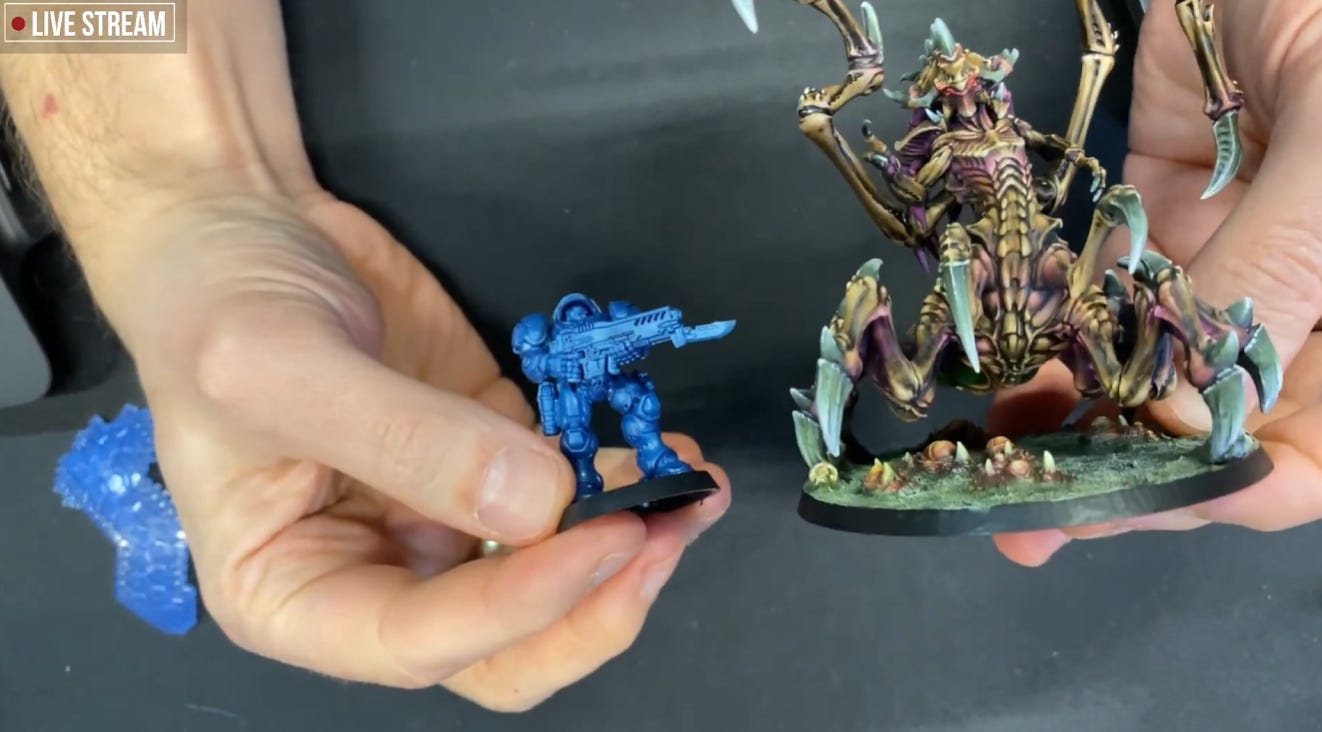
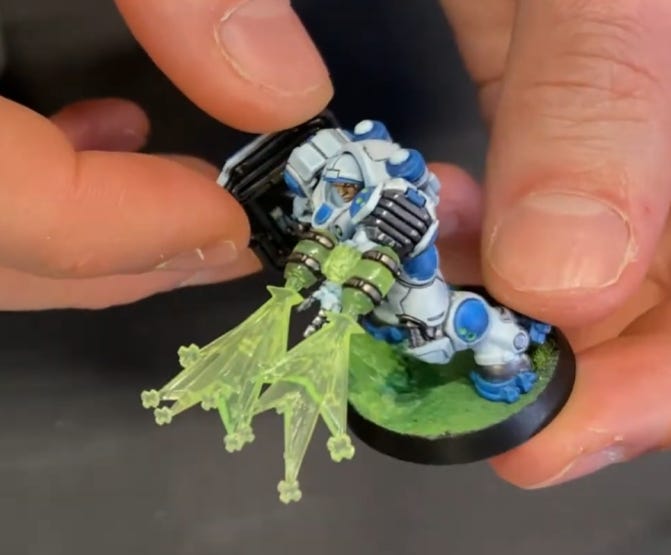
Clear plastic effects, shields, energy arcs, attack trails, are present, but optional. Newer hobbyists can paint over them, while experienced painters can lean into the extra visual flair.
Tokens, but not token hell
One concern often raised in modern tabletop games is ‘token bloat’ which Archon Studio seems keenly aware of.
Yes, the game uses tokens but sparingly and purposefully. Activation tokens help track unit usage. Scan tokens counter stealth mechanics like burrow and cloak. Boost tokens act as reminders, not persistent bookkeeping.
Crucially, many effects that could have been abstract markers are instead represented by physical miniatures: pylons, drones, nydus worms. They can be targeted, destroyed, and interacted with to keep the focus on models, not clutter.
The app, development pipeline
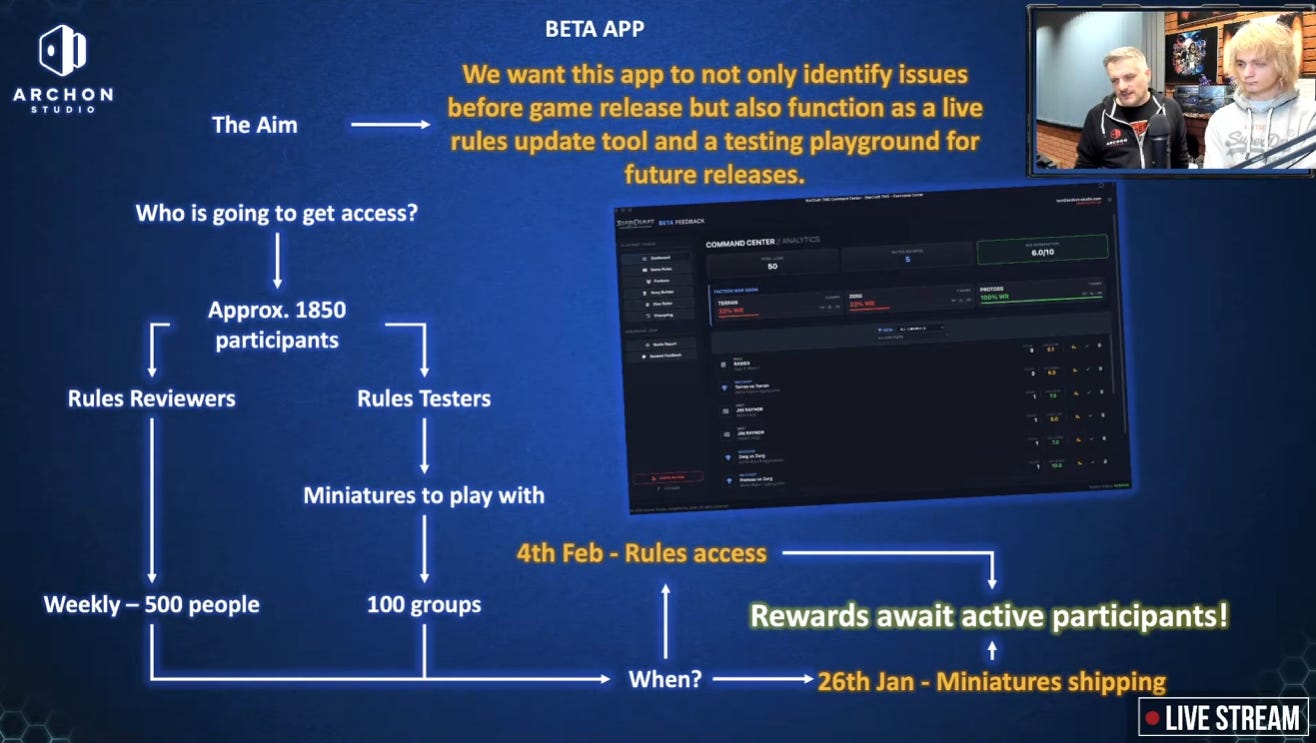
The most ambitious reveal wasn’t a miniature, it was the playtest app.
Rather than static PDFs, Archon Studio is rolling out a live rules platform designed to evolve in real time. The app allows testers to:
Read and score rules clarity section by section.
Submit balance feedback on individual units and cards.
Build armies and generate shareable ‘seed’ lists.
Log full battle reports with matchup data.
Use an average‑roll dice calculator to reduce luck skew.
This data flows directly into Archon Studio’s internal dashboard, allowing designers to see trends across hundreds of games rather than relying on anecdotal feedback.
It’s a strikingly modern approach and closer to live‑service videogame balancing than traditional tabletop iteration.
Open beta, real rewards
Roughly 1,850 people signed up for playtesting. Not all will receive miniatures, but access is being split deliberately:
Rules reviewers (hundreds at launch) gain early access to the full ruleset.
Rules testers (around 100 groups) receive physical miniatures to play full games.
There’s no NDA. Everything shown is licensor‑approved and openly discussable.
Active testers won’t just get a thank‑you, they’ll receive substantial store discounts, with hints of 80–90 per cent off future purchases for top contributors.
No FOMO. No scalpers
Perhaps the most refreshing stance came around production and availability.
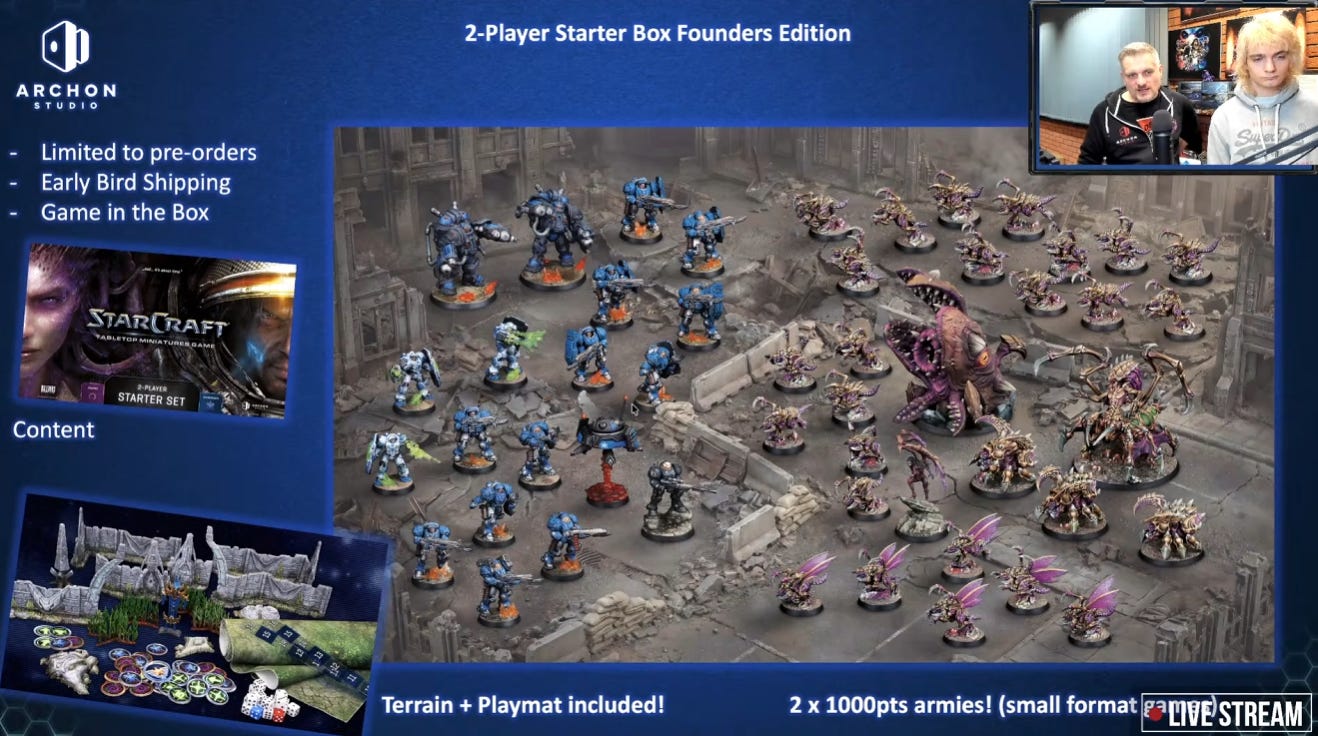
Archon Studio flatly rejected artificial scarcity. With in‑house manufacturing and stock planned in the tens of thousands of units, the studio insists scalping should never be an issue. Founders Editions will be limited but everything else is intended to stay available.
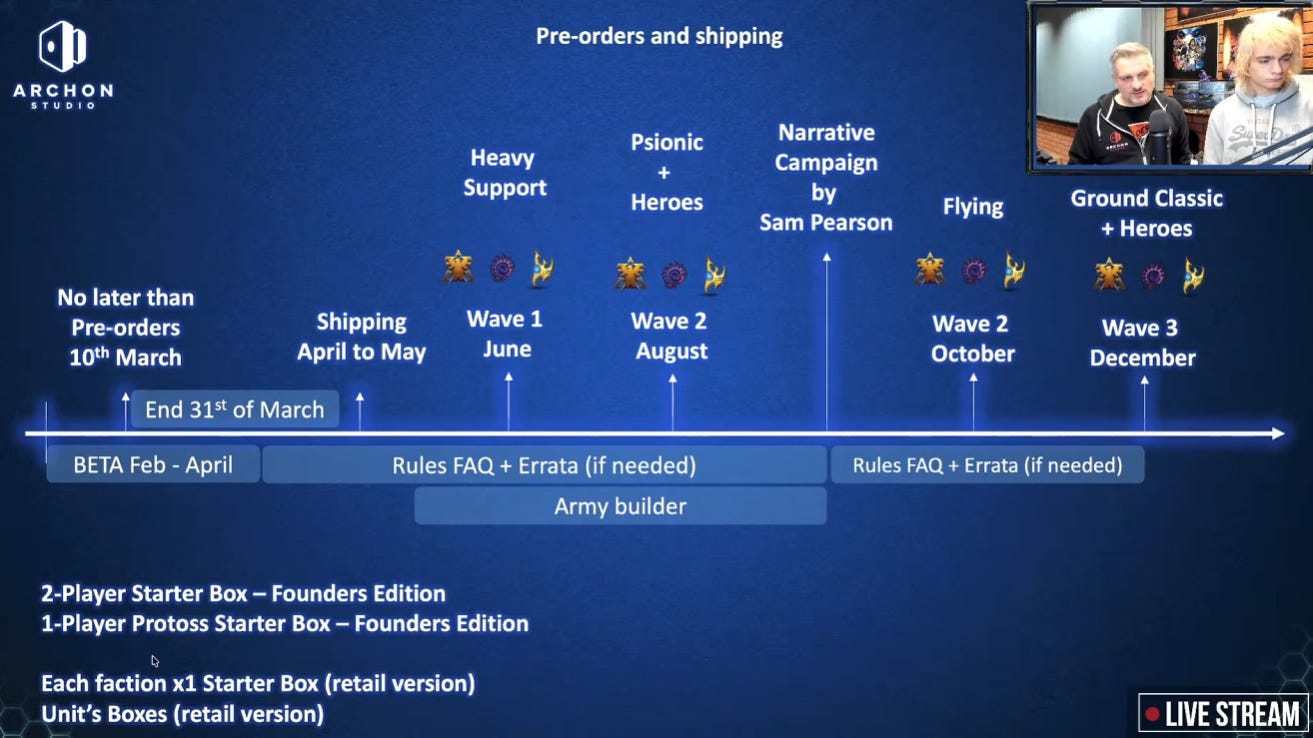
Pre-orders are targeted for no later than 10 March 2026, with shipping beginning April–May. Retail distribution will follow only after direct customers are fulfilled.
A StarCraft game built with its fans
There’s still plenty we haven’t seen. Full demo games, wave two units, organised play structures. But one thing is already clear.
Archon Studio isn’t just making a StarCraft tabletop game. It’s building an ecosystem, one where feedback loops are short, development is transparent and players are treated as collaborators rather than consumers.
For a franchise defined by competitive mastery and community obsession, that feels exactly right.
If StarCraft is about adaptation, pressure and learning from defeat, then its tabletop incarnation seems to be living those values from day one.
Thanks for reading!
Oh! Here’s another take on the roadmap reveal. I missed that detail about Sam Pearson (former Games Workshop dude) who is contributing a narrative campaign.
Also, there’s an unofficial Facebook group for Australia and Zealand right here.
Our coverage from November last year
If you missed the first round of news.
It's not the complexity of model assembly that is their problem, but the annoyance of preparing them for assembly. I love Archon's Masters of the Universe miniatures, but they really need to a) make fewer connection points on the sprues and b) make those connection points thinner. Cutting them off the frame and then slicing/filing them to remove the inevitable excess is probably the most taxing I've ever dealt with in any miniature line. The same annoyance is present in the other Archon minis I've built as well, including the Mammoth Walker and their Dungeons & Lasers kits.