

Armageddon outta here
Crusade: Armageddon revives one of Warhammer 40K’s most iconic wars blending nostalgia, chaos and a hint of narrative entropy

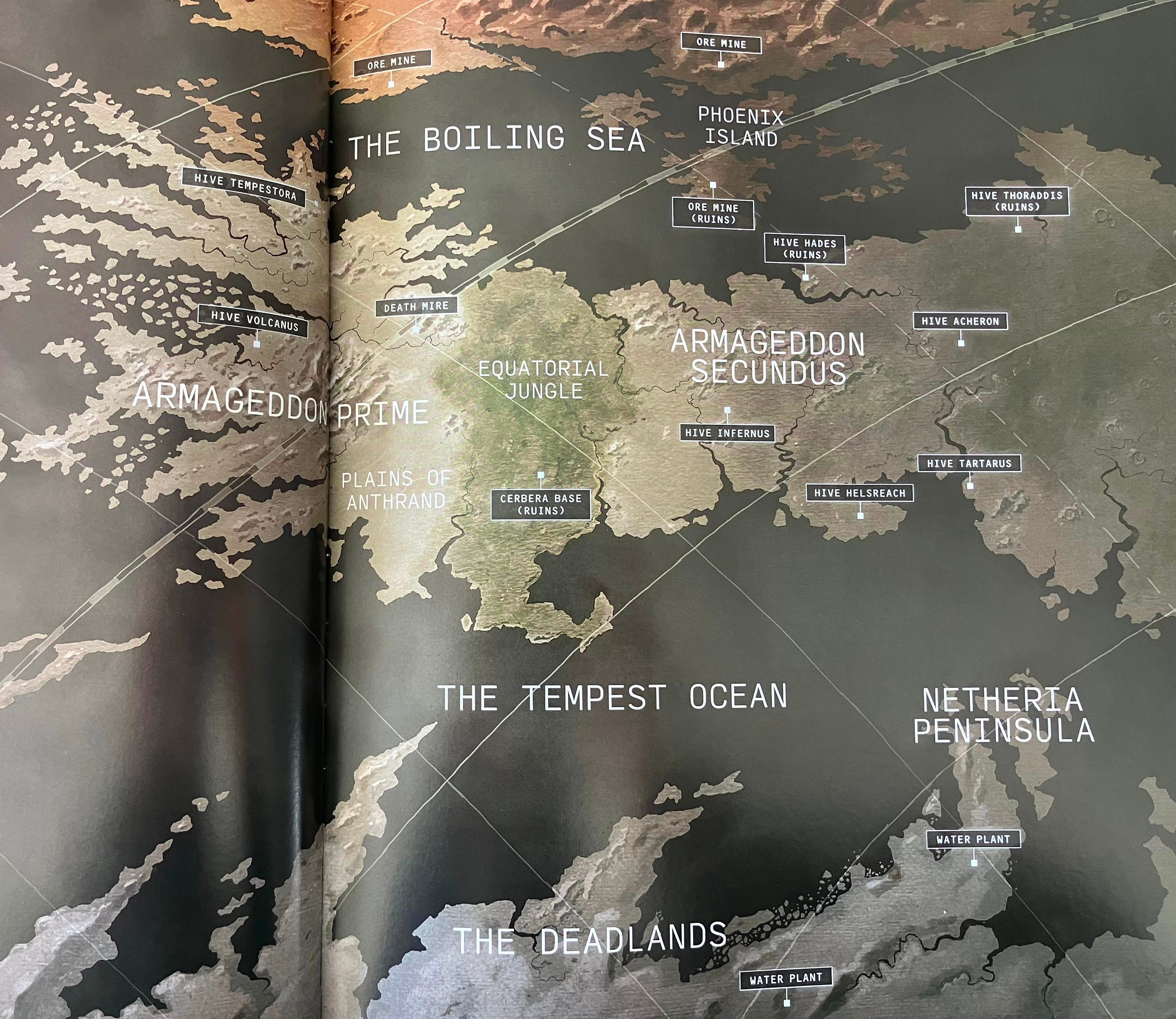
A walk among the titan tombstones
About 25 years ago Games Workshop invited the world to pick a side in the Third War for Armageddon. It was an exciting time for Warhammer 40K fans. Everyone was encouraged to report the results of their tabletop battles online (or letter) and over a period of a few months the community shared in a hefty chunk of shared fiction.
Andy Chambers, Jervis Johnson and Gavin Thorpe are the luminaries behind Codex: Armageddon (2000) – a slim supplement that set the scene for massive conflict between the Imperium and the Orks.
Names like Ghazghkull Thraka (the mighty Ork warboss) and Commissar Yarrick (the old guy with the power claw) were immortalised not only by the fluff in the book but also by their deeds on the battlefield as noted by countless gamers.
While the story was pretty standard fare, oh look, another doomed Imperial world, Games Workshop built a website for players to report their battles (yeah I know it’s not that remarkable given the state of tech today but it was for me – I was 13 at the time).
Friendly local gaming stores printed maps of the planet, clubs pinned flags to territories. For those playing at home, we visited that website frequently, drafted our own maps, read a lot of White Dwarf and got super creative with our terrain and hobby projects.
It was this international event that had us all participating in something bigger. Armageddon was, for many, a shared dream.
Each week, the campaign map updated. Industrial hives fell, Ork warbands surged, Imperial regiments dug in.
Steel Legion rocked the gas mask aesthetic. Black Templars did their grim-dark duty. Eldar popped by to say hi. Lots of greenskin krumpin was had. Pretty sure many space marines from the Dark Angels chapter fell, too (under my command).
These were all protagonists in a collective story being written in lounge rooms, garages, backyards, stores and other gaming spaces around the world.
And it was great.
For a few glorious months, players logged on to see whether their side had pushed the line an inch closer to victory. Even if the data was fuzzy and the backend probably ran on a single overworked server in Nottingham, it felt monumental.
Sure, the outcome of that hard-fought war was perhaps a tad curated, the Imperium held Armageddon and the Orks ‘retreated’, but I’ll never forget when a single zzap gun blew up a land raider and I rolled all those 1s for the armour saves of those terminators onboard.
More than two decades later
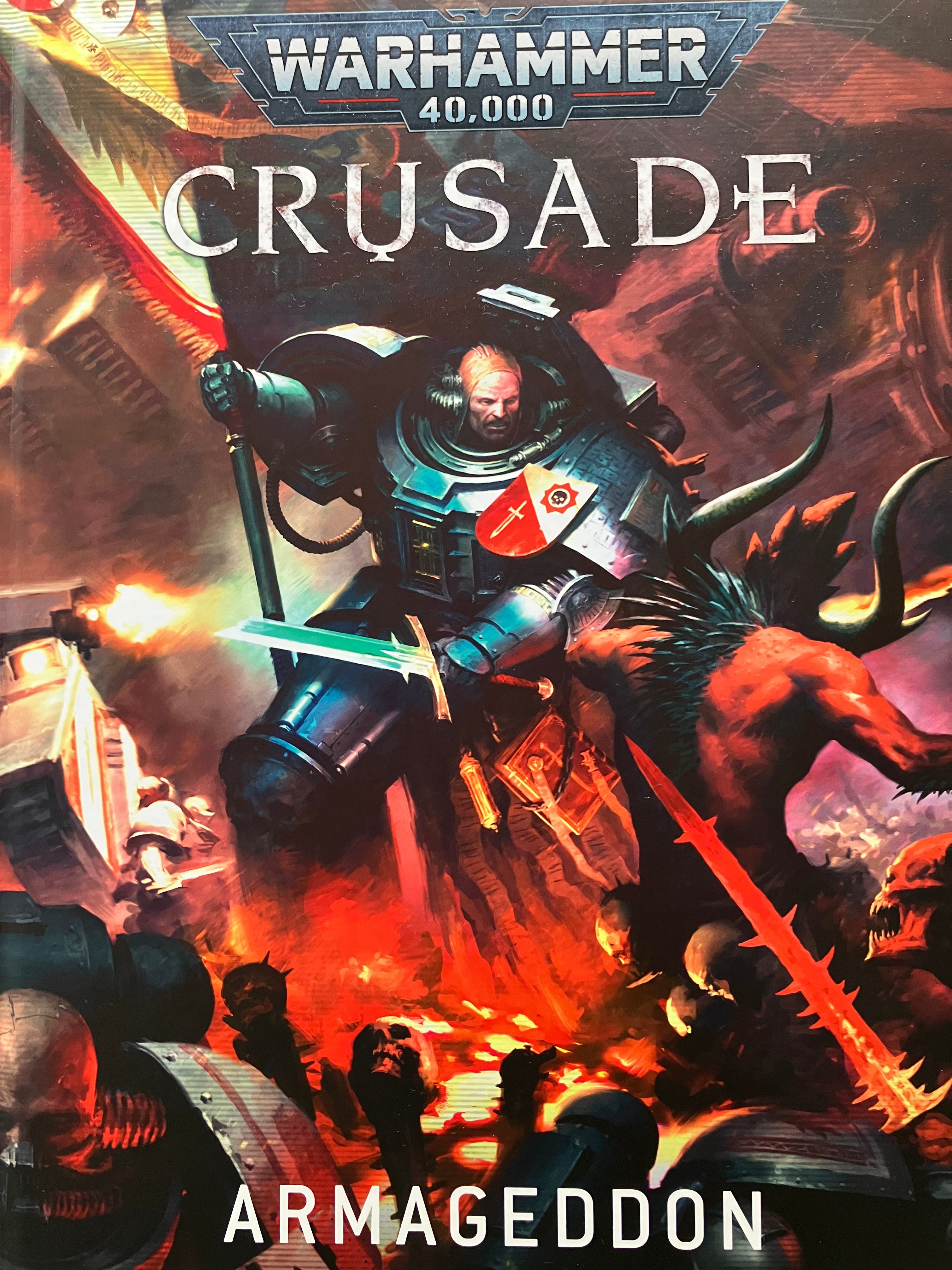
Games Workshop’s latest Crusade supplement, a 128-page hardback released earlier this year, doesn’t so much revisit Armageddon as it does drag the world through yet another apocalyptic cycle.
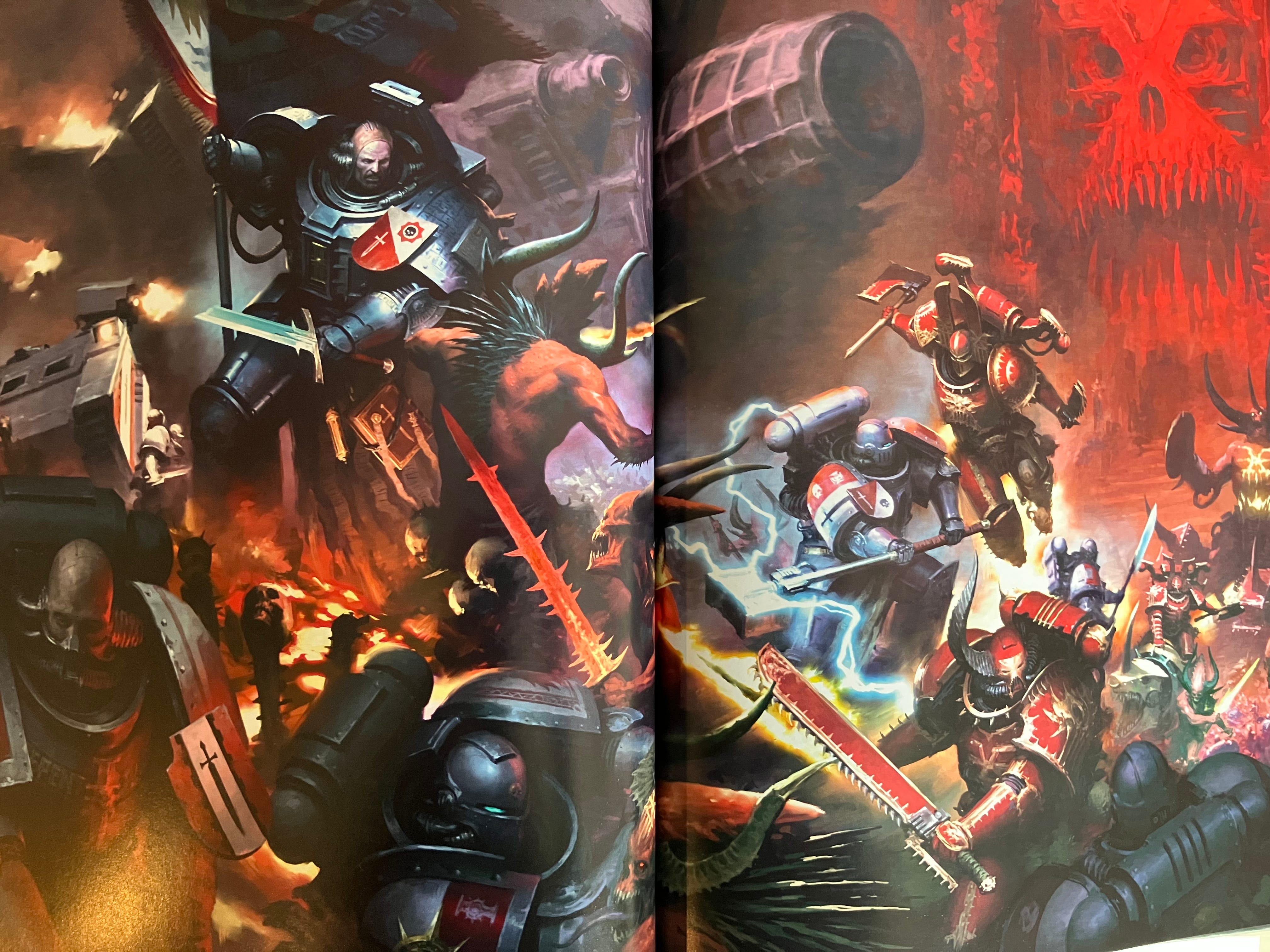
Angron, Daemon-Primarch of the World Eaters, (or Angry Ron as we call him here) has found a way back into the system through a warp rift charmingly named the Red Angel’s Gate. Chaos energy pours through the breach like lava through cracked hive-spires, infecting the atmosphere and turning loyal citizens into meat for the grinder.
The book splits between the lore and campaign rules, but the real trick is how tightly they’re intertwined. The first half retells the planet’s miserable history from the Ork wars to the long industrial death-rattle before pivoting to the new crisis.
Personally, I like this shift in the gothic grandeur. It’s different enough not to be a copy-paste of the Third War (although ironically still borrows from the past) and introduces new tricks for the tabletop while advancing/cycling the story.


This new supplement builds on the narrative Crusade system that 10th edition launched where you mass your forces, earn battle traits, cop a few scars along the way and maybe even score powerful relics.
Interestingly, this supplement recommends a Campaign Master to facilitate the experience. Having played a few Crusades myself, the game can get pretty janky mid-to-late campaign so it is a solid recommendation for someone to keep track of those min-max decisions in the spirit of running a fun event.
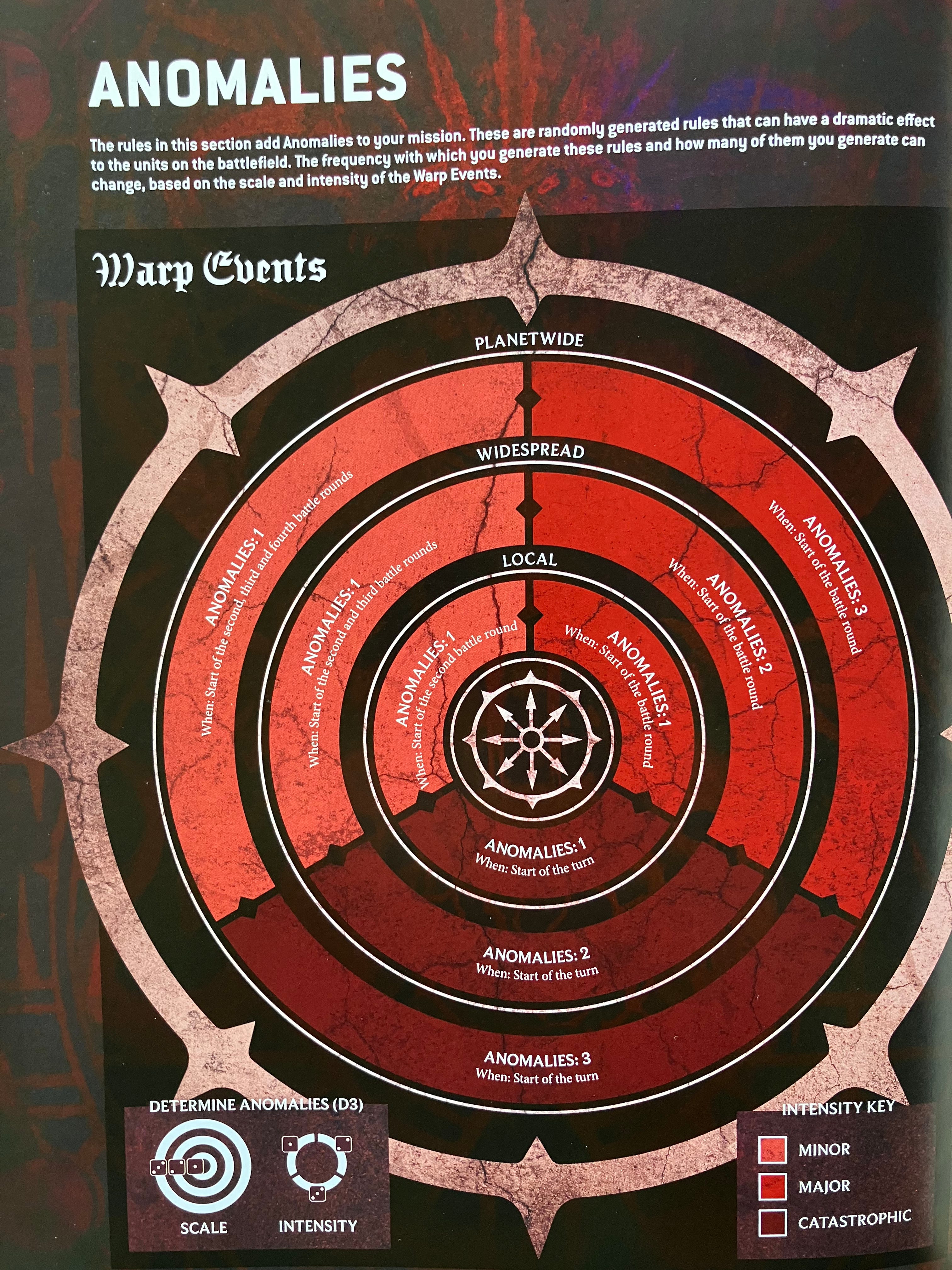
On theme with the slow disintegration of the world, there are 16 missions to try. Some of these feature warp storms, possessed terrain and randomised hellscape anomalies (there’s a handy foldout at the back of the book for easy reference).
‘Folded Space’, for example, can enable a perilous shortcut and functions as a neat stratagem.
STARTS: Your Shooting phase.
UNITS: One unit from your Crusade army that is within range of an objective marker within your deployment zone that you control.
COMPLETES: End of your turn.
IF COMPLETED: Remove your unit from the battlefield and set it up again anywhere and wholly within your opponent’s deployment zone that is more than 3” horizontally away from all enemy models. Give your unit one Warp counter.
But what about the alliances? Which side do you pick this time around?
In this latest iteration of Armageddon there are Gatebeakers, those who seek to stem the tide of Chaos; Desecrators, that mob that want a nightmare world; and Marauders, opportunist folk carving out their own path.
There are branching campaign trees as well which is really cool along with new badges, battle traits and relics.
Another cool touch are the tactical agendas. Pre-game you normally drum up agendas or secondary objectives which are commonly used to to score bonus XP for units under certain conditions. Well, if you prefer to generate those agendas mid-game, that’s now an option.


Nostalgic meets nihilistic
Orks, Chaos, Imperium, repeat. Is the Imperium trapped in narrative recursion? Yes.
Angry Ron has returned but every victory is temporary, every reclamation ultimately doomed. The hellscape twists reinforce this especially when the battlefield itself can turn on you.
That’s not to say there is futility in duking it out on Armageddon. It’s just a neat metaphor for entropy.
With all that in mind I wonder if we’ll see a Yarrick-Thraka ‘greatest hits’ duel in a future supplement if the rhyming scheme continues.
Anyway.
As for the overall play experience, I’m yet to give it a proper crack. From the outset it’s clear, though, that the Crusade: Armageddon narrative expansion is purposely unbalanced and likely to be unforgiving. And those missions look wild.
Understandably, the group consensus for this ruleset may be mixed. But we won’t know for sure until we try it.
So, who wants to play Crusade: Armageddon with me?
Do let me know if there’s interest in launching a narrative 40K event in the new year.
What’s this about 500 Worlds?
Did anyone enjoy the audio woes team Games Workshop had over the weekend with their preview teaser stream? I thought it was funny how they took a technical break about 50 minutes in, were off for a while and came back only for the audio quality to be worse haha. Oh well.
They capped off their presentation with this new narrative system called 500 Worlds.
Apparently Roboute Guilliman’s Ultramarines are clawing back lost territory across the Vespator Front, while a newly risen Necron overlord, Nekrosor Ammentar, awakens ancient horrors beneath their feet. The campaign puts players right inside that grind.
The release includes four books in a slipcase, a star map for territory control, boarding-action missions and new detachments for both Space Marines and Necrons. It also sees Titus of video game fame thrust into the tabletop narrative.
I’m more interested in the narrative template and whether other chapters and factions can get stuck in. If it’s just smurfs punching on robots then, at least for me, that limits the appeal of 500 Worlds for a club or group.
Is this the closing of the 10th edition era to bridge the lore for 11th? Someone in my community likened it to the Psychic Awakening stuff.